Welcome

I am Arie Soeteman, I am a PhD student working on Logical Reasoning for AI models at the University of Amsterdam, Institute for Logic, Language and Computation

About

My central interest lies in applying machine learning to solve logical problems and using logic to improve machine learning systems. I believe that by making AI more logical, we can build generalizable, explainable and trustworthy systems.

My background is in Logic and Computation. From 2022 to 2024, I worked as a researcher and developer at Fermioniq, where I developed a quantum circuit emulator with tensor networks. I am currently pursuing a PhD under supervision of Balder ten Cate, Ronald de Haan and Martin Grohe.

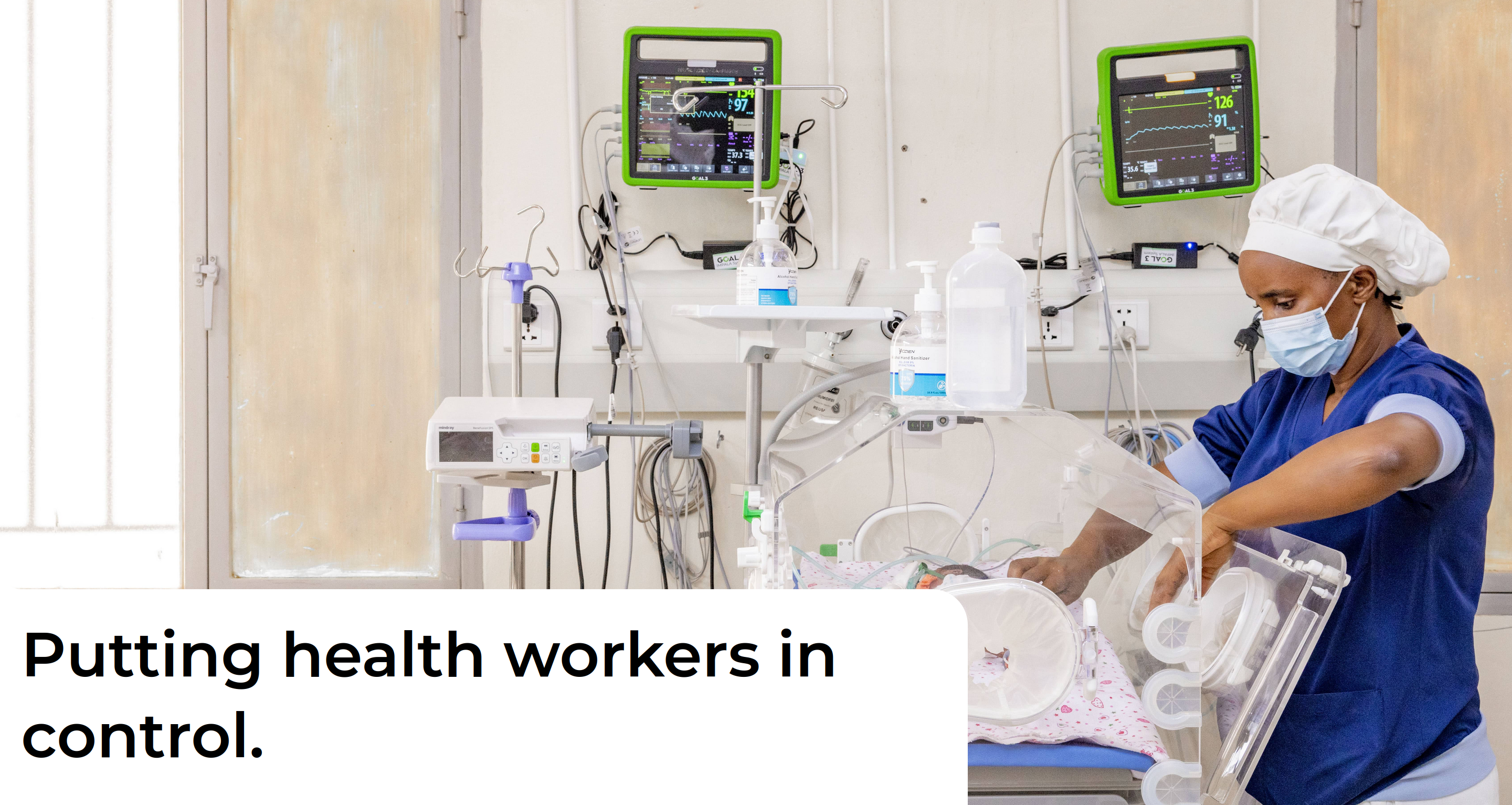
I enjoy teaching and presenting, and I’m always looking for ways to apply my technical background to socially meaningful problems. At the moment, I’m contributing to GOAL3, using AI and logic to predict critical illness events in low-resource intensive care units. The goal is to build an explainable prediction tool. I am currently in the KNAW Faces of Science program for science communication.

If you are interested in any of these topics and would like to discuss ideas, feel free to connect on Linkedin or send an email to a.w.[my surname]@uva.nl. I am always open to talk. Also, if you’re in Amsterdam let me know if you’d like to visit the Automated Reasoning Amsterdam seminar at Science Park, where we discuss recent work in logic and AI.

– I have an Erdős number of 4.

Selected Research

Neuro-Relational Programs: Unifying queries and neural computation over structured data

Neuro-Relational Programs: Unifying queries and neural computation over structured data

Arie Soeteman, Balder ten Cate, Maurice Funk, Benny Kimelfeld, Carsten Lutz, Moritz Schönherr

PODS 2027

Deep learning over relational databases usually means turning the database into a graph and applying a graph neural network. We introduce Neuro-Relational Programs, a Datalog-style query language that natively works on relational databases with fact embeddings. Natural fragments recover GNN-style message passing and Deep Homomorphism Networks, and we characterize the full language with a counting logic over real-weighted structures.

How expressive are graph neural networks in the presence of node identifiers?

How expressive are graph neural networks in the presence of node identifiers?

Arie Soeteman, Michael Benedikt, Martin Grohe, Balder ten Cate

Under review

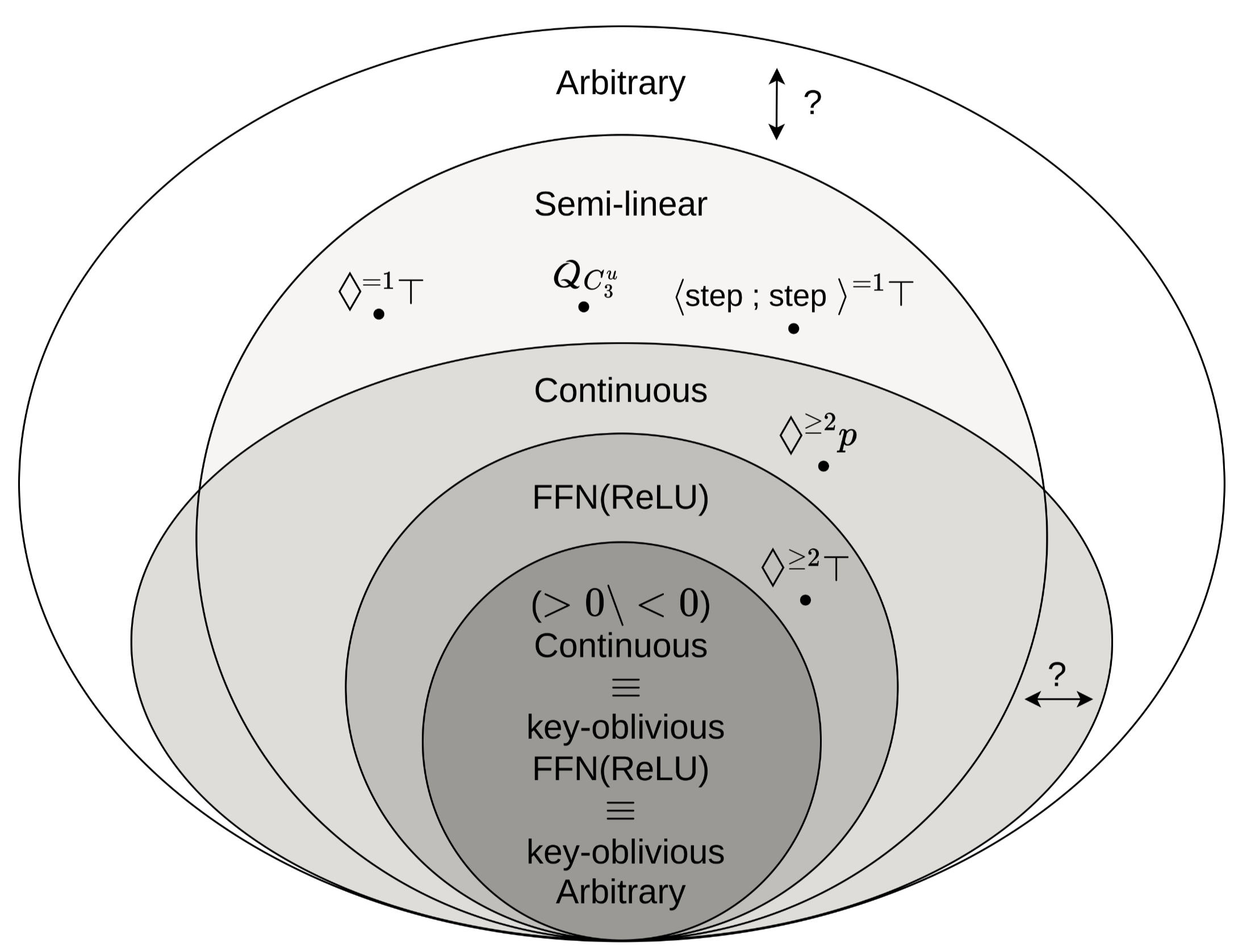
We initiate a study of the key-invariant expressive power of GNNs, inspired by the notion of order-invariant definability in finite model theory: which node queries that depend only on the underlying graph structure can GNNs express on graphs with unique node identifiers? We provide answers for various classes of GNNs with local max- or sum-aggregation.

The logical expressiveness of graph neural networks with hierarchical node individualization

The logical expressiveness of graph neural networks with hierarchical node individualization

Arie Soeteman, Balder ten Cate

NeurIPS 2025

A known result on graph neural networks is that their separating power matches graded modal logic. We extend this result to subgraph GNNs, and give a new architecture with complete separating power, inspired by isomorphism testers.

Non-zero noise extrapolation: accurately simulating noisy quantum circuits with tensor networks

Non-zero noise extrapolation: accurately simulating noisy quantum circuits with tensor networks

Anthony Thompson, Arie Soeteman, Chris Cade, Ido Niesen

Under review

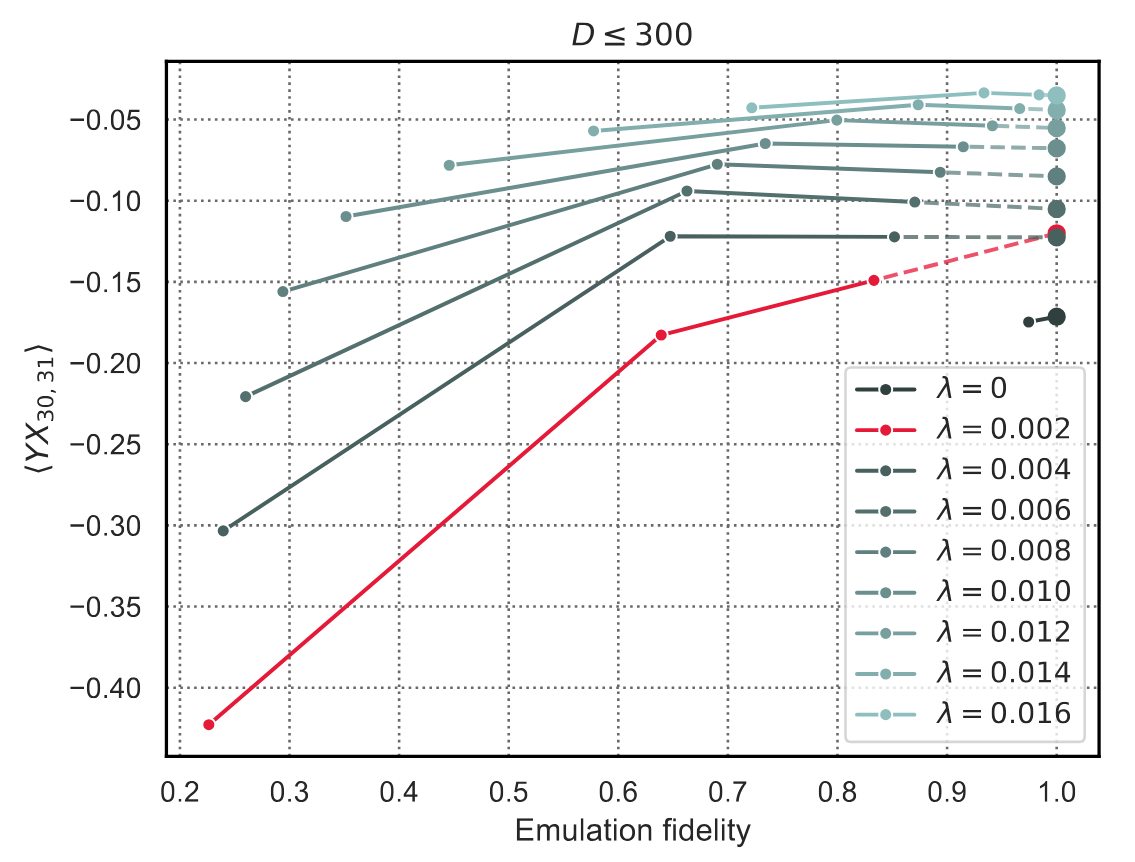
Running quantum computations on GPUs requires an exponential amount of resources. Tensor network methods like DMRG allow for efficient approximate simulation, but are unfit to match actual quantum hardware with noise. We develop non-zero noise extrapolation, and use this method to run noisy simulations previously beyond the reach of tensor networks.

Spatial Unity for the Apperception Engine

Spatial Unity for the Apperception Engine

Arie Soeteman, Michiel van Lambalgen

IJAR 2024

The Apperception Engine is a computational implementation of Kant's cognitive architecture from the first critique. The system constructs a logical theory that unifies sensory input. We use the Regional Connection Calculus and Alexandroff Topologies to build a Spatial Apperception Engine, following Kant's figurative synthesis.

Participatory budgeting with multiple resources

Participatory budgeting with multiple resources

Nima Motamed, Arie Soeteman, Simon Rey, Ulle Endriss

EUMAS 2022

In Participatory Budgeting, citizens vote on how to allocate public funds to projects, an approach shown to improve well-being and trust in government. The model is gaining global traction and is now used in my neighborhood in Amsterdam. We study a setting where projects require multiple resources and analyze how core properties like proportionality and strategy-proofness extend to this case.

Science-related

KNAW Faces of Science

KNAW Faces of Science

I was selected as one of this year's Faces of Science, a programme of the Royal Netherlands Academy of Arts and Sciences (KNAW) in which PhD candidates share their research and life as a young scientist with a broad audience. In a short video, blogs for NEMO Kennislink and a recent radio interview, I explain how we can make AI reason more reliably by giving it logical structure.

Quantum circuit emulation with Ava

Quantum circuit emulation with Ava

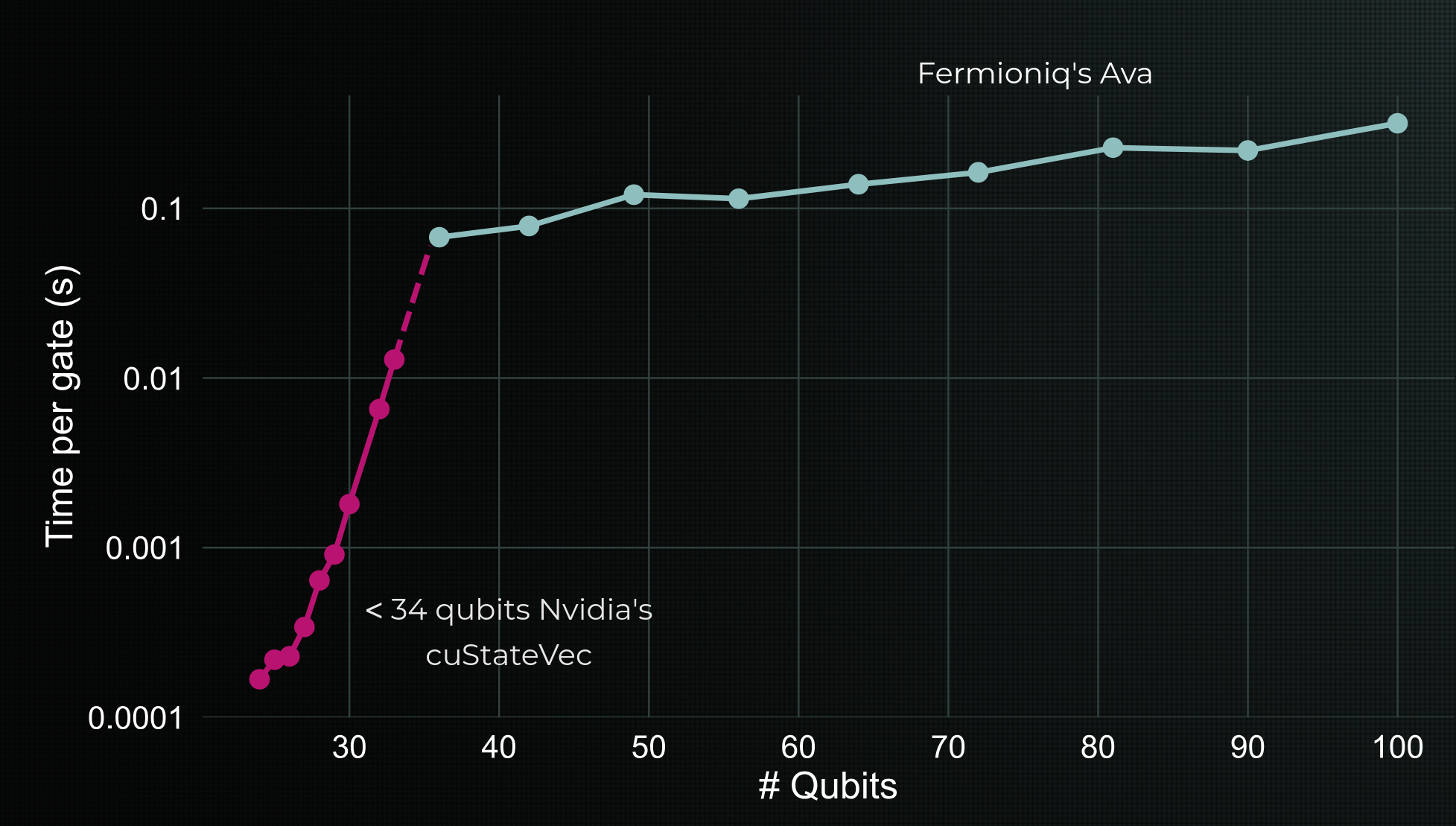
At Fermioniq, I was a core developer of Ava, a state-of-the-art tensor-network based quantum circuit emulator. Ava supports pure-state and noisy emulation via a simple python interface, with features like customizable noise models, circuit compression and quantum machine learning. If you want to explore how quantum computing could benefit your project, feel free to reach out to set up a conversation or experiment.

Critical event prediction with GOAL3

Critical event prediction with GOAL3

GOAL3 is a social enterprise improving healthcare in low-resource settings. Its IMPALA system is a vital sign monitor used in Malawi, Rwanda and Tanzania that helps unburden health workers and supports better diagnosis and treatment. We are developing machine learning models with logical structure to predict critical events from IMPALA data. Let me know if you're interested or want to contribute.